

Is Hiring a Sourcing Agent China Home Decor and Housewares the Most Cost-Effective Choice for Your Supply Chain?
July 23, 2026
Global retail importers, procurement directors, and home goods brand distributors face significant operational hurdles when importing housewares, kitchenware, and residential decorations from overseas manufacturing hubs. Working directly with a dedicated sourcing agent China home decor and housewares resolves these complexities by managing supplier verification, custom logo application oversight, material compliance, order consolidation, and strict delivery schedules on the ground. A specialized local procurement representative transforms unpredictable international purchasing into a streamlined, highly reliable supply chain operation. For example, a multinational retail enterprise organizing a seasonal promotional rollout can eliminate the risk of delayed shipments, glaze defects, or warped wood by engaging a local agent who inspects mass production on the factory floor long before cargo consolidation and sea freight dispatch occur.
By establishing direct operational oversight within Asian manufacturing zones, global businesses secure transparent factory-direct pricing while preserving brand equity and technical compliance. Navigating overseas industrial clusters requires deep knowledge of regional manufacturing specialties, material sourcing limits, and local commercial practices. A professional agent functions as your dedicated overseas procurement arm, converting brand specifications into exact factory production instructions while enforcing rigid contract accountability across high-volume home merchandise runs and premium household items alike.
Why Do Global Buyers Source Home Decor and Housewares from China?
Asian manufacturing ecosystems provide unmatched scalability, material diversity, and production capabilities for commercial housewares and decorative lines. Understanding the structural advantages of these industrial clusters allows procurement teams to optimize budgets while accessing expansive product portfolios.
Wide Range of Home Decor and Housewares Categories
Overseas manufacturing hubs allow global buyers to consolidate diverse product lines under a single procurement infrastructure, reducing management overhead and vendor sprawl.
Home Decor and Household Furnishings
Decorative household items represent a core segment for corporate executive gifting, retail distribution, and seasonal brand rollouts. Standard product lines include decorative ceramic vases, soy wax scented candles in custom glass jars, acacia wood serving trays, woven throw blankets, wall clocks, and minimalist metal desk ornaments designed for modern residential spaces.
Kitchenware, Tableware, and Drinkware
Kitchen and dining goods demand direct food-contact safety and long-term durability. Popular options include double-wall vacuum insulated stainless steel tumblers, New Bone China coffee mugs, bamboo cutting boards, silicone utensils, 18/10 stainless steel cutlery, and tempered glassware.
Storage Solutions and Soft Home Goods
Home organization and residential textiles maximize functional utility in consumer markets. Specialized offerings include canvas storage bins, velvet clothes hangers, organic cotton bath towels, linen tablecloths, and custom-embroidered cushions.
Smart Home and Lifestyle Accessories
Modern home retail relies heavily on functional electronic items to drive engagement. High-utility goods include ultrasonic aroma diffusers, LED desk lamps, digital kitchen scales, automated soap dispensers, and smart temperature-controlled mugs.
Scale, Cost Efficiency, and Customization Capabilities
Asian suppliers offer significant economies of scale, making custom housewares production accessible across varying order volumes. Modern contract factories possess advanced finishing machinery, allowing rapid transitions between screen printing, laser etching, digital UV printing, heat transfer, decal firing, and wood debossing. This flexibility enables international buyers to launch multifaceted retail lines without managing dozens of isolated factory relationships.
Furthermore, direct access to raw material markets allows rapid prototyping and cost-effective customization. Local manufacturers maintain deep supply networks for specialized components, enabling rapid assembly of custom home gift kits and bespoke housewares sets tailored to specific consumer demographics.
What Challenges Do Buyers Face When Sourcing Home Decor and Housewares from China?
Despite the advantages, direct overseas procurement presents severe operational risks for unassisted buyers. Home decor and kitchenware directly reflect a company’s brand image, meaning product flaws, structural instability, or delivery delays immediately jeopardize retail revenue and consumer trust.
Supplier Selection and Verification Obstacles
Unassisted buyers frequently rely on B2B directory portals to identify manufacturers. However, distinguishing between actual direct factories and unverified trading intermediaries remains difficult. Online storefronts often mask limited manufacturing capacities, inconsistent financial stability, or outsourced labor arrangements. Partnering with an unverified supplier increases the risk of unexpected price hikes, sudden lead-time extensions, or complete factory default during peak production seasons.
Additionally, many trading intermediaries lack direct control over factory quality systems. When technical defects occur on ceramic glazes, wooden finishes, or textile weaves, intermediaries often pass blame to sub-contractors, leaving the overseas buyer without recourse or compensation options.
Quality Control Risks, Material Flaws, and Brand Damage
Home decor and housewares must meet strict aesthetic, tactile, and functional standards. Common manufacturing flaws in housewares include uneven ceramic glazing, pinholes, wood warping from improper kiln drying, color bleeding on printed fabrics, weak logo adhesion, and substandard alloy compositions. Shipping thousands of defective branded items to a major retail client damages corporate reputation and wastes critical budget resources.
Material substitution represents another major risk in unmonitored production runs. Factories may substitute specified 304 food-grade stainless steel with cheaper industrial alloys, use lower-density MDF in place of solid wood, or swap recycled organic cotton for synthetic polyester blends, leading to compliance failures and safety hazards in destination markets.
Customization and Communication Barriers
Executing custom home decor and housewares requires precise technical communication regarding artwork vector files, laser engraving depths, surface finishing, material moisture content, and packaging layouts. Language barriers and time zone differences frequently lead to misinterpretations during sample development. Without local technical oversight, minor misunderstandings during artwork proofing or material selection lead to costly mass-production errors.
Color reproduction presents unique challenges across diverse household substrates. Ink applied to porous bamboo or raw ceramic behaves differently than ink applied to anodized aluminum, glass, or woven textiles. Achieving visual consistency across multi-product lifestyle kits requires constant calibration by experienced quality engineers on site.
Strict Retail Deadlines versus Logistics Delays
Home decor procurement operates under fixed seasonal sales windows and holiday launch dates. A autumn holiday home decor rollout that arrives three weeks late holds zero commercial value. Unmanaged factories often prioritize larger domestic orders, delaying export production schedules. Furthermore, improper export documentation, fragile packaging failures, or customs holds can stall cargo at international transit hubs, causing missed campaign launch windows.
Logistics management also involves navigating seasonal shipping congestion, vessel capacity constraints, and fragile cargo packaging requirements. Without local logistics management, buyers risk unexpected breakages, shipping surcharges, and transport delays that derail retail schedules.
How Does a Sourcing Agent China Home Decor and Housewares Add Value?
Engaging a dedicated procurement team in Asia introduces structured risk management, technical quality control, and strategic cost savings across the entire purchasing lifecycle.
If you are evaluating new vendor networks or auditing current suppliers, contact our sourcing experts for tailored supply chain strategies to streamline your overseas operations.
Supplier Searching, Vetting, and Price Negotiation
Local procurement teams conduct rigorous physical factory audits before order placement. They verify business licenses, production machinery, kiln capacities, woodworking dust control systems, staff capacity, quality management systems, raw material storage protocols, and social compliance records. By leveraging local market intelligence and direct factory access, a China purchasing agent negotiates transparent, uninflated unit pricing without hidden middleman margins.
Agents evaluate factory production logs to verify historical lead-time performance and machine maintenance routines. This deep operational vetting ensures selected vendors possess the technical capability and financial stability required to execute large-scale housewares contracts.
Product Development and Customization Support
Local agents bridge the gap between creative product concepts and physical manufacturing realities. They oversee technical artwork translation, guide substrate selection, ensure accurate Pantone color matching, and manage pre-production sampling for complex materials like ceramics, glass, timber, and textiles. Local teams evaluate physical prototypes against approved digital proofs, ensuring exact logo reproduction before greenlighting mass assembly.
During sample iteration, agents conduct preliminary durability testing, such as thermal shock tests on glassware, moisture level testing on timber, rub tests on printed logos, and drop tests on custom packaging. This pre-production validation catches mechanical and cosmetic design flaws early, saving time and tooling expenses.
Multi-Stage Quality Inspection Before Shipment
Systematic quality control prevents defective merchandise from entering international transit lanes. Local inspectors execute rigorous physical quality checks at defined production milestones, ensuring complete compliance with client specifications.
Inspectors conduct Incoming Quality Control (IQC) to test raw ceramic clay, timber moisture levels, metal sheets, and fabrics before assembly begins. During In-Process Quality Control (IPQC), field technicians verify glaze thickness, print registration accuracy, ink curing temperatures, and assembly tolerances on active production lines. Final Pre-Shipment Inspections (PSI) utilize international sampling frameworks to evaluate finished goods, retail presentation packaging, and export master cartons.
Order Consolidation and Logistics Coordination
Global buyers frequently source different housewares items—such as ceramic mugs, wooden coasters, cotton napkins, and stainless steel utensils—from separate specialized factories located across different industrial provinces. Local sourcing agents aggregate these shipments into a centralized consolidation warehouse. Goods are inspected, repacked, and loaded into single consolidated containers or unified air express shipments. This process significantly reduces international freight charges, minimizes port clearing fees, and simplifies import documentation. To handle broader procurement requirements across diverse consumer categories, organizations utilize a specialized China product sourcing agent to simplify multi-factory management.
Kitting services at consolidated warehouses allow buyers to create custom multi-item home gift sets enclosed in bespoke packaging. Agents supervise the assembly of these presentation boxes, ensuring accurate component placement and protective void fill before international dispatch.
Comprehensive Technical Comparison of Home Decor and Housewares Categories
Selecting appropriate home merchandise requires evaluating material attributes, logo decoration methods, structural integrity, surface finishes, and mandatory international compliance standards across distinct product verticals.
Category 1: Home Decor and Household Furnishings
Home decor products demand premium cosmetic finishes, structural stability, and safe, non-toxic raw materials. Items in this category frequently combine natural materials with metal or glass accents.
| Product Type | Primary Substrates | Branding Method | Technical QC Checkpoint | Compliance Standard |
| Scented Candle Vessels | Soda-Lime Glass, Soy Wax, Cotton Wick | Screen Print, Foil Stamping, Decal | Glass annealing stress test, wax tunneling test, wick alignment | REACH, ASTM F2179 (Glass Heat Resistance) |
| Decorative Wooden Tray | Solid Acacia Wood, MDF Core | Laser Engraving, Brass Inlay | Moisture content audit (8%-12%), surface flatness, lacquer lead test | FSC Certification, Lacey Act Compliance |
| Ceramic Planters and Vases | Dolomite, Stoneware | Glaze Transfer, Hand Painting | Water absorption test (<0.5% stoneware), glaze crazing check | REACH, California Prop 65 |
| Wall Clocks & Metal Decor | Powder-Coated Iron, Quartz Movement | Silk-Screen, Laser Marking | Silent sweep movement accuracy, paint thickness check | CE, RoHS |
Table 1: Technical parameters, testing protocols, and compliance standards for home decor merchandise.
Decorating home furnishings requires strict process control. Laser engraving on dense hardwoods like acacia or walnut must be calibrated to prevent scorching while achieving uniform depth. Glass decoration requires temperature-controlled annealing furnaces to ensure printed enamels bond permanently without compromising the structural integrity of thin-walled glass vessels.

Category 2: Kitchenware, Tableware, and Drinkware
Housewares intended for food preparation and dining require strict chemical safety compliance, food-contact certifications, thermal resilience, and dishwasher durability.
| Product Type | Primary Substrates | Branding Method | Technical QC Checkpoint | Compliance Standard |
| Insulated Stainless Tumblers | 304/316 Stainless Steel, Food-Grade PP | Rotary UV Print, Laser Etching | Vacuum insulation retention (6hr >60C), 24hr leak test | FDA Food Grade, LFGB, BPA-Free |
| Ceramic Mugs & Dinnerware | New Bone China, Porcelain | Fired Decal (800C+), Sublimation | Lead and cadmium leaching test, thermal shock resistance | FDA CPG Sec. 545.400, California Prop 65, LFGB |
| Bamboo Cutting Boards | Laminated Moso Bamboo, Food Oil | Laser Engraving, Hot Stamping | Delamination stress test, glue non-toxicity audit | FDA 21 CFR 175.105, LFGB |
| Stainless Cutlery Sets | 18/10 Stainless Steel | Laser Etching, Hydraulic Embossing | Corrosion resistance (48hr salt spray), edge sharpness | FDA Food Grade, ISO 8442 |
Table 2: Material specifications, decoration methods, and food-contact compliance for kitchenware and tableware.
Testing procedures for kitchenware are exceptionally rigorous. Ceramic glazes undergo acid immersion testing to guarantee heavy metals like lead and cadmium do not leach into food. Stainless steel tumblers are subjected to ultrasonic weld inspections and vacuum retention testing to ensure performance standards match long-term retail claims.
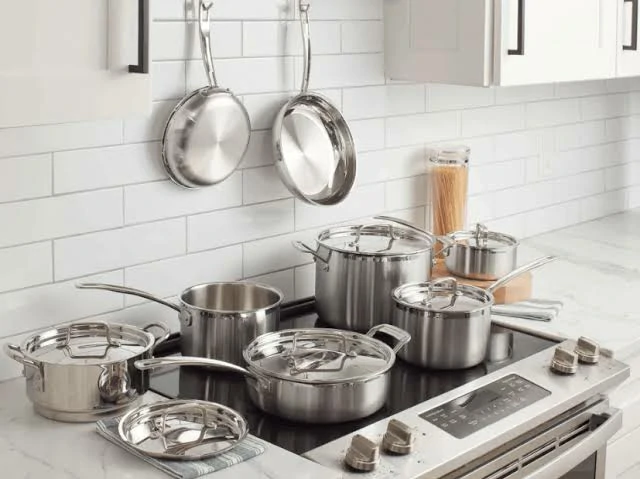
Category 3: Home Storage and Organizational Merchandise
Storage products emphasize structural load-bearing capacity, tear resistance, material safety, and space-saving foldability.
| Product Type | Primary Substrates | Branding Method | Technical QC Checkpoint | Compliance Standard |
| Canvas Storage Bins | Heavy-Duty Cotton Canvas, Non-Woven | Screen Print, Woven Patch | Seam load capacity (>15kg), frame rigidity check | REACH, OEKO-TEX Standard 100 |
| Velvet Hangers | ABS Frame, Flocked Nylon Velvet | Embossed Logo, Metal Hook Plate | Flocking shed test, hook pull-out force (>50N) | California Prop 65, REACH |
| Wooden Storage Boxes | Pinewood, Metal Hinges | Hot Stamping, Laser Engraving | Hinge alignment, corner joint strength, lid flushness | FSC Certification, TSCA Title VI |
| Plastic Food Containers | BPA-Free Borosilicate Glass, Tritan | Pad Printing, Mold Inset | Airtight snap latch test, microwave thermal limit | FDA Food Grade, LFGB |
Table 3: Technical requirements and quality checkpoints for storage and organization housewares.
Storage commodities undergo mechanical testing to ensure they handle daily household usage. Fabric handles on canvas bins undergo repeated weight-bearing drop tests, while flocked hangers are rubbed against light fabrics to verify velvet flocking does not shed onto clothing.
Category 4: Home Textiles and Soft Goods
Home textiles and linens require strict dimensional stability, vibrant color retention, and soft tactile feel across diverse material blends.
| Product Type | Primary Substrates | Branding Method | Technical QC Checkpoint | Compliance Standard |
| Bath Towel Sets | 100% Ring-Spun Cotton, Microfiber | Jacquard Weave, Embroidery | Absorbency rate (<5 sec), linting check, GSM verification | OEKO-TEX Standard 100, GOTS |
| Throw Blankets | Recycled Acrylic, Fleece, Wool | Woven Label, Sublimation | Pilling resistance (Grade 4), seam burst strength | GRS (Global Recycled Standard), REACH |
| Table Linens & Napkins | Linen, Cotton Blend | Screen Print, Digital Textile | Colorfastness to washing (Grade 4+), shrinkage (<3%) | OEKO-TEX Standard 100 |
| Decorative Cushions | Polyester Velvet, Memory Foam | Heat Transfer, Piping Accent | Zipper endurance (500 cycles), fill resilience | California TB 117-2013 (Flammability) |
Table 4: Fabric metrics and safety standards for home soft goods.
Fabrics must undergo GSM (grams per square meter) weight verification using precision textile cutters and digital balances. Pre-shrunk cotton linens, throw blankets, and cushion covers are tested through standardized washing cycles to ensure dimensional shrinkage remains under three percent.
Category 5: Smart Home Appliances and Gadgets
Consumer technology items carry electrical safety risks and require strict compliance with international electromagnetic interference standards and battery transport regulations.
| Product Type | Primary Substrates | Branding Method | Technical QC Checkpoint | Compliance Standard |
| Aroma Diffusers | ABS, PP Plastic, Wood Grain Laminate | Silk-Screen, Water Transfer | Ultrasonic transducer output, leak check | CE, FCC, RoHS |
| Digital Kitchen Scales | Tempered Glass, Stainless Sensor | Screen Print, Laser Etching | Calibration accuracy (+/-0.1g), glass impact test | CE, RoHS |
| Smart Desk Lamps | Anodized Aluminum, LED Panel | Laser Engraving, Tampo Print | Lux output consistency, flicker-free driver check | CE, FCC, UL Listed |
| Rechargeable Soap Dispensers | ABS Plastic, Lithium Battery | Pad Print, Electroplated Trim | Pump priming reliability, IPX4 waterproof rating | CE, RoHS, UN38.3 |
Table 5: Technical requirements and electrical compliance for smart housewares.
Electronic housewares and gadgets undergo functional testing on 100 percent of production units. Digital scales and LED lamps undergo continuous burn-in testing to verify circuit board safety features and sensor calibration stability.
Category 6: Eco-Friendly and Sustainable Housewares
Sustainable merchandise utilizes renewable or recycled substrates, requiring verified supply chain documentation to validate environmental marketing claims.
Substrates like bamboo, wheat straw composites, cork, organic cotton, and recycled PET (rPET) require strict chemical and physical evaluation. Bamboo and cork items must be monitored for moisture content to prevent mold growth during ocean transit, while rPET fabrics require Global Recycled Standard (GRS) transaction certificates to verify origin authenticity.
Biodegradable polymers blended with natural plant fibers require thermal testing to ensure they maintain structural integrity when exposed to elevated temperatures during shipping and warehouse storage.
What Types of Businesses Benefit from Local Procurement Services?
Outsourcing home decor and housewares procurement to an overseas agent provides strategic advantages across various business models and organizational structures.
Home Decor Brands and Retail Distributors
Commercial distributors selling bulk home goods, kitchenware, and seasonal merchandise rely on predictable supply chains, aggressive margin structures, and consistent product quality. Local agents help distributors maintain stable factory pricing, negotiate flexible payment terms, and manage factory capacity during peak manufacturing seasons.
Distributors also utilize local agents to develop exclusive product designs and private-label collections that differentiate their catalog offerings from competitors.
E-commerce Brands and Private Label Retailers
Direct-to-consumer brands expanding into private-label home decor and lifestyle accessories utilize procurement agents to develop custom branded products that adhere strictly to custom packaging and private labeling guidelines.
E-commerce sellers leverage the agent’s consolidation capabilities to bundle complementary items—such as a candle, ceramic coaster, and matchbox—into high-margin gift sets, optimizing shipping dimensions for fulfillment centers.
Corporate Enterprises and HR Departments
Large corporations purchasing annual employee gifts, client appreciation packages, executive housewares, and internal event giveaways require strict corporate governance, environmental compliance, and consistent brand representation. Local agents enforce these corporate guidelines directly across all contracted production lines.
Corporate procurement departments rely on agents to aggregate spending across multiple regional offices, securing volume discounts and standardized merchandise across global branches.
Marketing and Interior Design Agencies
Agencies managing client promotional campaigns or commercial interior projects require diverse product catalogs, rapid turnaround times, and flawless execution. A local sourcing agent acts as their dedicated backend fulfillment team, managing multiple factory lines simultaneously to meet strict project dates.
What Is the Step-by-Step Process of Sourcing Home Decor and Housewares from China?
Executing a successful procurement project follows a structured, milestone-driven workflow that eliminates quality surprises, material defects, and shipping delays.
Step 1: Requirement Definition and Specification Submission
The buyer defines product specifications, material preferences, target unit prices, required order quantities, delivery deadlines, and compliance needs. Vector artwork files (AI or EPS formats) with exact Pantone color codes are prepared for factory setup.
The agent reviews artwork files and material choices for technical feasibility, ensuring line weights, font sizes, ceramic glazes, or wood carving tolerances match the limitations of the chosen manufacturing method.
Step 2: Supplier Research, RFQ Evaluation, and Costing
The sourcing agent surveys pre-vetted factory networks, issues Requests for Quotation (RFQs), compares tooling fees, and negotiates terms. The agent provides the buyer with a transparent cost breakdown covering unit prices, customization costs, setup fees, and estimated freight expenses.
Contract terms explicitly define quality standards using Acceptable Quality Limit (AQL) parameters, establishing clear criteria for lot acceptance or rejection.
Step 3: Pre-Production Sampling and Visual Approval
The factory creates physical pre-production samples featuring the finalized logo, color glaze, surface finish, and custom packaging. The agent evaluates sample print alignment, color accuracy, finish smoothness, and material quality before dispatching the sample to the buyer for final sign-off.
In urgent scenarios, agents conduct live video inspections and high-resolution photo reviews to accelerate sample approval without waiting for international courier delivery.
Step 4: Production Follow-Up and In-Line Quality Monitoring
Once sample approval is granted, mass production begins. The agent monitors production schedules, tracks raw material delivery, checks timber kiln drying logs, and conducts in-line inspections to catch application or assembly errors early in the run.
Inspectors verify that ceramic kilns maintain correct firing temperature curves and that print operators maintain consistent ink density and curing speeds throughout the mass production run.
Step 5: Final AQL Inspection, Packaging, and Freight Dispatch
After mass assembly finishes, inspectors perform final random sampling using standard AQL 2.5/4.0 criteria. They review print durability, product functionality, surface finishes, packaging protection, and carton barcode labeling. Upon passing inspection, the agent manages customs clearance and coordinates ocean or air transport to meet the buyer’s schedule.
Master cartons undergo ISTA 1A drop testing from specified heights onto hard concrete to verify packaging resilience against rough handling and vibration during international ocean transit.
How to Choose a Reliable Supplier for Home Decor and Housewares in China?
Selecting qualified suppliers requires evaluating specific operational metrics beyond basic unit price considerations.
Manufacturing and Export Experience
Evaluate a factory’s operational history, annual export volume, and primary market experience. Facilities accustomed to serving Western import markets better understand international compliance regulations, packaging durability demands, and strict quality tolerances.
Experienced export manufacturers maintain established relationships with accredited testing laboratories, streamlining the acquisition of required safety, food-contact, and environmental certificates.
Customization Capability and Advanced Machinery
Verify that the manufacturer owns advanced, in-house decoration and finishing equipment rather than subcontracting logo printing, glaze firing, or laser engraving to unverified third parties. In-house processing capabilities ensure superior quality consistency, tighter quality control, and shorter production lead times.
Facilities featuring automated multi-color screen printing presses, precision CNC woodworking machinery, high-speed fiber laser engravers, and climate-controlled curing tunnels offer superior consistency compared to manual workshops.
Communication Efficiency and Project Management
Effective suppliers maintain transparent, timely communication regarding production status, material availability, and schedule adjustments. Clear communication prevents misunderstandings, eliminates unexpected delays, and ensures rapid resolution of technical issues.
Dedicated project managers who speak English and understand international trade terminology greatly improve operational efficiency and reduce project friction.
Quality Management Certifications
Ensure target facilities maintain documented quality management systems, such as ISO 9001 certification. Valid ISO compliance demonstrates that the factory follows standardized quality protocols across component sourcing, assembly, surface treatment, and final testing.
Social compliance audits, such as Sedex SMETA or BSCI, further verify that the factory operates ethically and adheres to fair labor and environmental standards.
Advanced Quality Control Procedures and Testing Standards for Housewares
Implementing rigorous testing protocols ensures home decor and housewares survive international transit and deliver long-term performance.
Cross-Hatch Tape Test for Print Adhesion
Printing on non-porous surfaces like plastic, glass, ceramic, or coated metal requires cross-hatch grid testing (ASTM D3359). Inspectors use a precision razor blade to cross-cut a lattice pattern into the printed logo, apply pressure-sensitive tape, and pull it off abruptly at a 90-degree angle.
If ink flakes away from the grid intersections, the curing process was incomplete, requiring the factory to adjust ink formulations or drying tunnel temperatures before proceeding with mass production.
Spectrophotometer Color Measurement ($\Delta E$)
To eliminate subjective arguments over logo or product color accuracy, inspectors utilize portable spectrophotometers to measure color values against official Pantone standards.
The calculated color difference ($\Delta E$) must remain below 2.0 for brand-critical logos and product trims. Readings above this threshold indicate visible color variance, prompting ink or glaze readjustment.
Mechanical Stress, Moisture, and Thermal Shock Testing
Functional housewares undergo physical stress simulation. Timber products are tested using digital pinless moisture meters to ensure internal moisture levels range between 8 and 12 percent, preventing cracking or warping in dry target climates. Glassware and ceramics undergo thermal shock testing by transferring items directly from hot water baths to ice water.
These physical stress tests identify weak components and structural vulnerabilities before master cartons are sealed, preventing product failures in the hands of corporate clients and consumers.
Managing Intellectual Property and Private Label Packaging
Protecting brand IP and executing custom retail packaging requires strict administrative and operational oversight in overseas manufacturing hubs.
Non-Disclosure and Non-Use Agreements
Before sharing proprietary product designs, mold drawings, or vector artwork, agents execute legally binding Non-Disclosure, Non-Use, and Non-Circumvention (NNN) agreements governed by regional jurisdiction. These contracts prevent factories from reusing custom molds or printing extra branded inventory for secondary market sales.
Private Label Packaging and Kitting Management
Seasonal rollouts often require custom retail boxes, die-cut foam inserts, custom tissue wrapping, barcode stickers, and branded instruction manuals. Agents coordinate printing with specialized packaging facilities to ensure color matching between the packaging box and the enclosed merchandise.
During kitting, workers follow visual assembly guides prepared by the agent, placing each item, promotional card, and protective void fill in its designated position before sealing export master cartons.
Frequently Asked Questions
What are custom home decor and housewares commonly used for in commercial business?
Custom housewares and home decor serve retail store inventory, corporate client appreciation gifts, direct-to-consumer private label brands, seasonal promotions, executive onboarding packages, and milestone celebrations.
Why use a local sourcing agent instead of buying directly from online portals?
A local agent conducts physical factory audits, negotiates uninflated pricing, monitors active logo printing and glazing lines, performs rigorous pre-shipment AQL quality inspections, and consolidates multi-factory orders to prevent costly defective shipments.
Can home decor and kitchenware be customized with precise corporate Pantone colors?
Yes. Factories utilize standardized Pantone Matching System (PMS) color codes to mix inks, glazes, and dyes, ensuring brand logo colors remain identical across different materials such as ceramics, wood, metal, and textiles.
What is the typical Minimum Order Quantity (MOQ) for custom housewares from China?
Minimum order quantities vary depending on material types and custom tooling needs. Standard stock items with simple screen printing may accept MOQs of 200 to 500 units, while custom-molded ceramics, glass vessels, or bespoke electronics may require 1,000 to 3,000 units.
How do procurement agents manage tight retail launch deadlines?
Agents establish contractually binding production schedules with factory management, conduct mid-production checks, and pre-arrange priority air freight space or expedited express shipping to ensure delivery before target retail launch dates.
How are shipping costs optimized when sourcing multiple housewares SKUs?
By utilizing order consolidation, agents collect products from multiple specialized factories into a single warehouse, repacking goods to eliminate volumetric waste and shipping them in a single sea container or air shipment, drastically reducing freight expenses.
Partnering with MarsGift for Overseas Procurement
MarsGift serves as a trusted overseas procurement partner for international brands, marketing agencies, home decor distributors, and corporate enterprises seeking seamless manufacturing solutions across Asia. We provide complete end-to-end supply chain management, connecting global buyers with audited, top-tier home decor and housewares manufacturers while enforcing strict quality control standards. Our experienced field teams manage every aspect of your procurement strategy, including factory audits, price negotiations, technical artwork proofing, in-line printing oversight, final AQL inspections, and consolidated freight delivery. By combining deep technical expertise with direct on-the-ground management, MarsGift eliminates international supply chain risks, ensuring your home decor and housewares arrive on time, within budget, and built to precise brand specifications.
References
- World Trade Organization – Technical Barriers to Trade: https://www.wto.org/english/tratop_e/tbt_e/tbt_e.htm
- International Organization for Standardization – ISO 9001 Quality Management: https://www.iso.org/iso-9001-quality-management.html
- U.S. Food and Drug Administration – CPG Sec. 545.400 Ceramicware Lead and Cadmium: https://www.fda.gov/regulatory-information/search-fda-guidance-documents/cpg-sec-545400-pottery-ceramics-imported-and-domestic-cadmium-contamination
- U.S. Consumer Product Safety Commission – Commercial Import Regulations: https://www.cpsc.gov/Business–Manufacturing/Business-Guidance
TDK Settings
- Title: Sourcing Agent China Home Decor and Housewares: B2B Sourcing Guide
- Description: Discover how a sourcing agent China home decor and housewares handles factory audits, quality control, custom branding, and order consolidation.
- Keywords: sourcing agent China home decor and housewares, China housewares supplier, home decor sourcing agent China, custom housewares China, China purchasing agent