

How Can Buyers Control Quality When Sourcing Industrial and Makeup Brushes from China?
August 17, 2026
Yes. Buyers can control brush quality from China by treating brush sourcing as a technical procurement project, not a simple product search. Industrial and makeup brushes may look simple, but their performance depends on fiber selection, density, trim length, bonding, handle materials, assembly, and inspection. An experienced international sourcing agent can translate these requirements into supplier specifications, samples, production checks, and shipment standards. For example, a makeup brush may need consistent fiber softness and low shedding, while an industrial brush may require abrasion resistance, controlled stiffness, and stable dimensions. The sourcing process must therefore begin with the application, then move through material selection, factory evaluation, sampling, production control, and final inspection.
Why Brush Sourcing Requires More Than Finding a Factory
Brushes sit at the intersection of materials, manufacturing processes, and end-use performance. A supplier may offer a competitive quotation, yet the quotation alone says little about whether the brush will perform consistently in production.
For B2B buyers, the first step should be defining the intended application. Industrial brushes serve different functions across manufacturing, cleaning, polishing, sealing, conveying, and surface treatment. Makeup brushes focus more heavily on fiber feel, application control, shedding resistance, shape retention, and user contact.
The same brush construction can also produce different results when suppliers change fiber diameter, filament length, filling density, adhesive, ferrule, or handle material. These changes may not appear obvious in a quotation or product photograph.
A buyer should therefore create a technical product brief before requesting prices. The brief should define the required dimensions, materials, performance targets, packaging, and inspection criteria.
This approach also helps a global purchasing agent compare factories on the same technical basis. Without consistent specifications, each supplier may quote a different product while using the same product name.
Define the Application Before the Product
A useful specification normally covers:
- Brush type and intended application
- Overall dimensions and working area
- Fiber or filament material
- Fiber diameter and length
- Filling density
- Trim shape and tolerance
- Handle, block, ferrule, or base material
- Bonding or fixing method
- Color and surface finish
- Packaging requirements
- Quality standards and inspection criteria
For industrial products, buyers should also define operating conditions. These may include temperature, contact pressure, rotation speed, chemical exposure, surface type, and expected service life.
For makeup brushes, the specification should focus on the intended cosmetic application. Foundation, powder, blush, contour, eye makeup, and detail brushes require different shapes and fiber behavior.
How Industrial Brush Manufacturing Differs From Makeup Brush Production
Industrial and makeup brush manufacturing share several basic principles, but their quality priorities differ significantly.
Industrial brushes usually serve a functional process. Their performance may depend on stiffness, wear resistance, filament retention, dimensional stability, and resistance to the working environment. A factory may need to control the relationship between filament characteristics and the brush’s operating conditions.
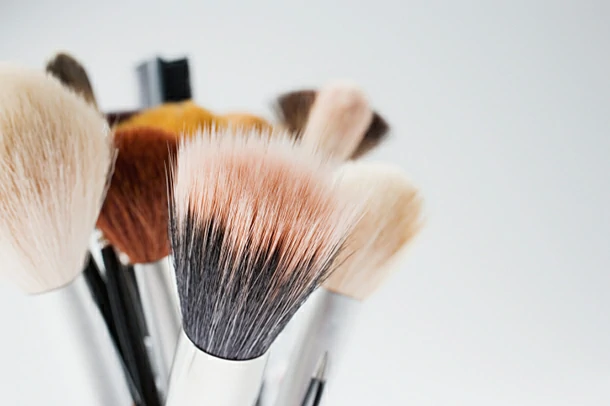
Makeup brushes serve a different purpose. Their performance depends on controlled product application and user experience. Fiber softness, shape, density, shedding, handle balance, and ferrule assembly can all affect the finished product.
Natural animal hair may also introduce additional sourcing and quality considerations. FDA guidance discusses natural bristle brushes and identifies potential contamination concerns associated with certain natural animal bristles. Buyers should therefore verify material origin and applicable compliance requirements before production.
Synthetic fibers can offer more controlled material specifications for many cosmetic brush applications. However, the material name alone does not define performance. Filament diameter, taper, cross-section, crimp, length, and density can all influence the finished brush.
| Brush Category | Main Quality Priorities | Typical Procurement Focus |
|---|---|---|
| Industrial cleaning brush | Wear resistance, stiffness, retention | Filament material, density, block structure |
| Roller brush | Balance, dimensional accuracy, surface contact | Core, filament arrangement, runout |
| Strip brush | Sealing, flexibility, retention | Backing, filament height, density |
| Abrasive brush | Surface treatment performance | Abrasive filament, grit, density |
| Foundation brush | Application control, softness, shedding resistance | Synthetic fiber, shape, density |
| Powder brush | Pickup and distribution | Fiber softness, loft, trim shape |
| Eye makeup brush | Precision and control | Fiber diameter, taper, compactness |
| Detail brush | Fine application and shape retention | Fiber selection, tip shape, assembly |
Caption: Key sourcing considerations for industrial and makeup brush categories.
This distinction matters when comparing China sourcing agent companies. A sourcing partner should understand the product’s technical purpose rather than simply match a buyer with the lowest quotation.
What Should Buyers Check During Factory Evaluation?
Factory evaluation should go beyond checking whether a supplier has brush products in its catalog. Buyers should examine production capability, material control, quality systems, customization experience, and communication.
A supplier that specializes in industrial brushes may have strong technical capabilities but limited experience with cosmetic packaging. A cosmetic brush factory may have strong assembly and packaging systems but lack equipment for demanding industrial applications.
Review the Production Process
A typical brush production process may include material preparation, cutting or forming, tufting or filament insertion, bonding, trimming, assembly, surface finishing, cleaning, inspection, and packaging.
The exact process varies by brush structure. Buyers should ask which stages the factory controls internally and which stages it outsources.
Outsourcing does not automatically indicate poor quality. However, additional subcontractors increase the number of process interfaces that require management.
Check Material Traceability
Material control is particularly important for products that contact skin or cosmetics. The buyer should identify the source and specification of fibers, adhesives, handles, ferrules, and other components.
For products entering regulated markets, the sourcing team should also understand the buyer’s compliance responsibilities. In the United States, the FDA states that cosmetic manufacturers and responsible parties must meet applicable safety and labeling obligations. The Modernization of Cosmetics Regulation Act also introduced facility registration and product listing requirements for applicable businesses.
The European Union has its own regulatory framework. Regulation (EC) No 1223/2009 establishes requirements for cosmetic products placed on the EU market, including product safety requirements.
An overseas sourcing agent can help buyers organize supplier documents and production information. However, regulatory responsibility remains with the relevant parties in the destination market.
Verify Customization Capability
Customization may involve more than changing colors. Buyers may request:
- Custom fiber specifications
- Private label handles
- Custom ferrules
- Logo printing or engraving
- Special brush shapes
- Custom packaging
- Retail-ready sets
- Different brush combinations
- Custom dimensions
- Application-specific industrial structures
The supplier should confirm which changes require new tooling, new molds, new production fixtures, or revised assembly processes.
How Should Buyers Manage Sampling and Quality Control?
Sampling is where a written specification becomes a physical product. It should not be treated as a simple approval step.
A good sample process compares the supplier’s interpretation with the buyer’s intended product. Buyers should inspect both appearance and functional performance.
For makeup brushes, inspection may include fiber softness, shape, density, shedding, ferrule alignment, handle finish, adhesive quality, and packaging.
For industrial brushes, inspection may include dimensions, filament retention, stiffness, trim consistency, balance, runout, bonding strength, and performance under the intended operating conditions.
Use a Golden Sample
After approval, keep one approved sample as the reference standard. The sample should represent the agreed materials, dimensions, construction, color, finish, and packaging.
The factory should receive a documented specification rather than relying only on photographs. Photos can show appearance, but they rarely communicate fiber diameter, density, adhesive quantity, or dimensional tolerance.
A sourcing team can then compare pre-production samples against the approved reference. This creates a clear basis for production decisions and reduces disputes caused by subjective descriptions.
Inspect During Production
Final inspection alone may not identify every process problem. Mid-production checks can identify issues before the entire order reaches the packing stage.
For example, an inspection may reveal inconsistent filament density across the first production batch. The factory can then adjust the process before completing thousands of units.
For cosmetic products, hygiene and material handling also deserve attention. FDA guidance recommends appropriate control of raw materials, production conditions, equipment cleanliness, sampling, and records within cosmetic manufacturing operations.
This is especially relevant when brushes form part of a cosmetic product set or retail program.
How Can a China Sourcing Agent Reduce Procurement Risk?
A China sourcing agent adds value when the buyer needs local supplier research, factory communication, quality control, and logistics coordination.
The role should not stop at sending factory catalogs. A useful sourcing process connects the buyer’s commercial requirements with factory-level execution.
A professional sourcing agent can help structure supplier research around product specifications, target pricing, order volume, customization requirements, and delivery expectations.
The next stage is supplier comparison. Buyers should evaluate factories against the same criteria instead of choosing based on price alone.
| Evaluation Area | Questions Buyers Should Ask |
|---|---|
| Product capability | Does the factory make the required brush type? |
| Materials | Can it provide consistent fiber and component specifications? |
| Production capacity | Can it support the expected order volume? |
| Customization | Can it meet the required dimensions and branding needs? |
| Quality control | Does it use documented inspection procedures? |
| Compliance | Can it provide relevant material and factory documents? |
| Communication | Can technical requirements move accurately between teams? |
| Lead time | Can the supplier meet the required production schedule? |
| Packaging | Can it meet retail or shipping packaging requirements? |
| Logistics | Can the order move efficiently to the destination market? |
Caption: Practical supplier evaluation criteria for brush procurement.
This evaluation becomes particularly useful when buyers work with multiple suppliers. Experienced purchasing agents can coordinate quotations, samples, production schedules, inspections, and shipping through one local communication channel.
For buyers operating around Yiwu, a professional sourcing agent in Yiwu can also support product searches within the local wholesale ecosystem. Yiwu is particularly relevant for buyers sourcing small commodities, accessories, packaging, and complementary products.
However, not every industrial brush requires a Yiwu supplier. Technical industrial products may require factories in specialized manufacturing clusters elsewhere in China. A sourcing strategy should follow the product, not the map.
What Should International Buyers Prepare Before Placing an Order?
The quality of the sourcing process often depends on the quality of the initial brief.
Buyers should provide as much technical information as possible before supplier selection. A clear brief reduces repeated quotations and prevents factories from making assumptions.
For a new brush project, the buyer should prepare the following information:
- Product drawings or reference samples
- Application and expected working conditions
- Required materials
- Dimensions and tolerances
- Target order quantity
- Packaging requirements
- Branding requirements
- Destination market
- Required certifications or documentation
- Target delivery schedule
If some specifications remain uncertain, the buyer can identify them as open points. The sourcing team can then ask factories for technical recommendations.
This process works particularly well for OEM projects. A factory may suggest a different filament structure or assembly method after reviewing the intended application.
For example, an industrial equipment distributor may initially request a nylon brush with a specific filament length. After reviewing the operating environment, the supplier may recommend a different filament diameter or density. The buyer can then test the revised specification before committing to mass production.
The same principle applies to makeup brushes. A brand may provide a reference brush but leave the fiber specification open. The sourcing team can request several samples with different fibers and densities. The brand can compare pickup, blending, softness, and shape retention before selecting the final construction.
This makes sampling a decision tool rather than a formality.
FAQ About Industrial and Makeup Brush Sourcing
Can a China sourcing agent find both industrial and makeup brush suppliers?
Yes. The key requirement is supplier matching based on application and technical specifications. Industrial and cosmetic brushes require different production capabilities, so buyers should not use one generic supplier checklist for both categories.
What information should I send before requesting a quotation?
Send the product type, dimensions, materials, application, order quantity, packaging requirements, branding requirements, and destination market. A drawing or physical sample can make the quotation more accurate.
How can I compare quotations from different brush factories?
Compare quotations against the same specification. Check material grade, fiber dimensions, density, assembly method, packaging, MOQ, tooling costs, lead time, and inspection terms. A lower unit price may reflect a different product configuration.
Should I approve a sample before mass production?
Yes. A production sample provides a physical reference for the agreed construction. For repeat orders, keep the approved sample and written specification as the quality reference.
Can sourcing agents handle quality inspections?
Many sourcing agencies provide factory audits, production monitoring, and pre-shipment inspections. The exact inspection scope should be agreed before the order begins.
Are makeup brushes subject to cosmetic regulations?
The brush itself may not always have the same regulatory status as a cosmetic formulation. However, products used with cosmetics can still raise material, hygiene, labeling, and market-specific compliance questions. Buyers should confirm the applicable requirements for their product and destination market. FDA and EU authorities provide official guidance for cosmetic safety and market requirements.
Is Yiwu suitable for industrial brush sourcing?
Yiwu can be useful for many commodity and accessory sourcing projects. However, highly technical industrial brushes may require specialized factories in other manufacturing regions. Supplier selection should depend on product requirements and production capability.
Why Work With Marsgifts for China Brush Sourcing?
Marsgifts supports international buyers that need local assistance with product sourcing, supplier communication, quality control, and China-based procurement. The company works across multiple product categories and connects buyer requirements with suitable Chinese suppliers.
For industrial and makeup brush projects, the focus should remain on practical procurement control. That includes understanding the application, defining specifications, evaluating factories, comparing samples, monitoring production, and arranging inspection before shipment.
Marsgifts can also coordinate sourcing projects that involve multiple product categories. This can help buyers reduce communication gaps when brushes are part of a broader product program.
The goal is straightforward: create a sourcing process that gives buyers clearer specifications, better supplier visibility, and more control over production decisions.
References
For cosmetic manufacturing and regulatory information, buyers can refer to the U.S. Food and Drug Administration (FDA), including its guidance on cosmetic Good Manufacturing Practice and production controls. The FDA also provides current information on cosmetic facility registration and product listing. For European requirements, see the European Commission’s cosmetics legislation and the European Union Cosmetics Regulation on EUR-Lex. For information concerning natural bristle brushes, refer to the FDA Compliance Policy Guide.