

OEM or ODM for Corporate Gifts: Which Sourcing Model Fits Your Brand?
septiembre 23, 2026
OEM and ODM serve different purposes in corporate gift sourcing. OEM suits brands that already control the product design, specifications, or intellectual property. ODM works better when a buyer wants to select, adapt, and brand an existing product concept. The right choice depends on design ownership, development requirements, order volume, target cost, compliance needs, and launch timing.
Corporate gifts often look simple from the outside. A branded notebook, travel accessory, tech item, drinkware product, or executive gift set may contain many sourcing decisions behind the finished item. Material selection, construction, packaging, branding, production methods, quality control, and delivery requirements all affect the final result.
That makes the OEM versus ODM decision more important than simply choosing between two supplier models. It determines how much control the buyer has over development and how much work the supplier must handle before production.
For companies purchasing gifts for employees, customers, events, distributors, or promotional campaigns, the sourcing model should match the commercial purpose of the program. A custom product for a long-term brand campaign may require a different approach from a large quantity of branded gifts needed for an upcoming event.
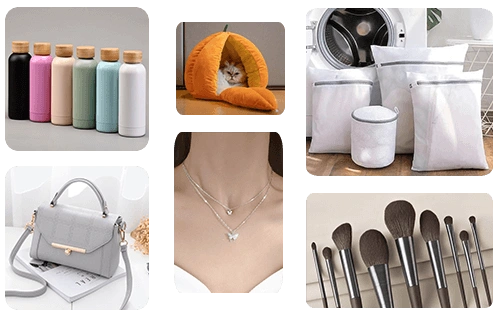
OEM vs. ODM for Corporate Gifts: What Is the Difference?
OEM stands for Original Equipment Manufacturer. In an OEM arrangement, the buyer generally provides the product specifications, design requirements, drawings, samples, or other technical information. The supplier manufactures the product according to those requirements.
ODM stands for Original Design Manufacturer. In this model, the supplier already has product designs, structures, or development capabilities that the buyer can use as a starting point. The buyer may select an existing design and request changes to materials, colors, dimensions, finishes, branding, packaging, or other details.
The distinction becomes clearer when looking at product development.
An OEM project usually starts with a defined product concept. The buyer may already have a prototype or detailed specification. The supplier’s responsibility focuses on turning that specification into a manufacturable product while meeting the agreed requirements.
ODM sourcing begins from a different position. The buyer may know the intended function, target price, audience, and branding direction without having a complete product design. The supplier contributes more to the development process.
| Factor | OEM | ODM |
|---|---|---|
| Starting point | Buyer-defined design or specification | Supplier’s existing design or concept |
| Design control | Mainly buyer-led | Shared or supplier-led |
| Product modification | Based on buyer specifications | Usually available within supplier capabilities |
| Development responsibility | More on buyer | More on supplier |
| Personalización | Often extensive | Usually based on an existing platform |
| Adecuado para | Proprietary products and established designs | Faster adaptation of existing products |
| IP considerations | Buyer should define ownership clearly | Existing supplier IP requires careful review |
Corporate gift projects can use either model. The difference lies in where the product development responsibility sits.
A company with an established product design may not need an ODM solution. Using an existing supplier design could also create limitations if the product needs a unique structure or proprietary function.
On the other hand, a company planning a seasonal campaign may not need to develop an entirely new product. An ODM approach can provide a practical starting point when speed and customization matter more than complete product ownership.
The distinction also affects communication. OEM projects require detailed specifications and clearer technical documentation. ODM projects require stronger evaluation of the supplier’s existing products, modification capabilities, and ownership terms.
How Do OEM and ODM Affect Cost, MOQ, and Development Time?
Cost comparisons between OEM and ODM should consider the entire project rather than the unit price alone.
OEM development can involve engineering, prototyping, tooling, molds, testing, packaging development, and multiple sample revisions. Those costs may become significant when the product has a unique structure or requires dedicated production equipment.
ODM projects may reduce some development work because the supplier starts with an existing design. The product can still require modifications, samples, packaging, branding, and testing. However, the development path may be shorter when the requested changes stay within the supplier’s existing production capabilities.
MOQ also varies by product and supplier.
A standard ODM product may have an established production process and existing components. That can make smaller customized orders more practical in some cases. OEM products often require dedicated materials, tooling, or production arrangements, which can increase the economic pressure of lower-volume orders.
For corporate gift programs, quantity should therefore be considered alongside customization.
A company ordering 500 branded products for an executive event may approach the project differently from a distributor ordering 20,000 units for an annual promotional campaign. The first project may prioritize flexibility and short development time. The second may justify deeper customization and dedicated tooling.
Lead time also depends on the product category.
A simple ODM item may move from selection to sampling relatively quickly. More complicated modifications can extend the timeline. OEM projects generally need more development work when the supplier must create a new product structure.
The practical cost model can be viewed through several components:
| Cost Element | OEM Consideration | ODM Consideration |
|---|---|---|
| Desarrollo de productos | Potentially higher | Often lower for existing designs |
| Tooling | May require dedicated tooling | Existing tooling may be usable |
| Muestreo | More development rounds may occur | Usually starts from an existing product |
| Embalaje | Fully customizable | Custom packaging can usually be added |
| Branding | Defined by buyer | Added to selected product |
| Unit price | Depends heavily on volume and complexity | Depends on existing product and modifications |
| Development time | Can be longer | Often shorter when changes are limited |
Neither model automatically produces a lower total cost.
A low unit price can become less attractive if the product requires expensive modifications or fails quality checks. Conversely, an inexpensive ODM product may not deliver enough differentiation for a brand-focused campaign.
The commercial objective should therefore determine the acceptable balance between development investment, unit cost, customization, and timing.
When Should a Brand Choose OEM or ODM?
OEM generally fits corporate gift projects where product differentiation is important.
A company may already have a proprietary product concept, industrial design, packaging system, or established specification. In that situation, the supplier needs to manufacture according to defined requirements rather than introduce its own standard product.
For example, a technology company could develop a custom desktop accessory for a product launch. The accessory may need a specific shape, material combination, surface finish, packaging format, and brand identity. An OEM structure allows those requirements to remain central to production.
Long-term corporate gift programs can also justify OEM development when the same product will be ordered repeatedly.
Repeated orders can help spread initial development costs across larger production volumes. A dedicated product can also create stronger consistency across campaigns and markets.
ODM becomes more practical when the product concept is less differentiated.
Suppose a company needs branded travel accessories for a conference. The purchasing team may not need a unique product structure. An existing supplier design could provide the required function, while custom colors, logos, packaging, and accessory combinations create the desired brand presentation.
That approach can reduce unnecessary development work.
ODM can also suit buyers entering an unfamiliar product category. Instead of developing a product from the ground up, the buyer can review established designs and identify suitable options. The supplier’s existing experience can help clarify realistic customization boundaries.
A useful decision framework includes five questions:
- Does the product require a proprietary design?
- Who should own the final product design?
- How much customization does the campaign require?
- What quantity will the buyer order?
- How quickly must the finished goods reach the market?
If the answer centers on proprietary design and long-term differentiation, OEM may align with the project structure.
When speed, proven product structures, and moderate customization receive greater priority, ODM may be more appropriate.
The distinction should not be treated as permanent. A company can use ODM for one gift category and OEM for another. Even the same product line can move from ODM customization to a more dedicated OEM arrangement as order volume and brand requirements increase.
How Can a China Product Sourcing Agent Support OEM and ODM Projects?
Working with factories directly can be difficult when the buyer has limited visibility into the local supplier market. A sourcing partner can help connect product requirements with suitable manufacturers and coordinate the commercial process.
A agente de abastecimiento de productos can support both OEM and ODM projects, but the actual work differs according to the sourcing model.
For OEM projects, supplier matching starts with technical requirements. Product drawings, material specifications, dimensions, target costs, packaging requirements, expected quantities, and quality standards can help narrow the supplier pool.
ODM sourcing starts from a different brief. The buyer may provide a product category, target customer, price range, branding requirements, and expected quantity. Supplier research can then focus on factories with suitable existing designs and customization capabilities.
Supplier evaluation should go beyond a catalog.
Production capacity, product consistency, quality control procedures, communication efficiency, export experience, customization capabilities, and lead times can all affect project performance.
Sampling is another important stage.
An initial sample can reveal whether the supplier understands the product brief. Material quality, dimensions, colors, printing, logo placement, construction, and packaging should be reviewed before production begins.
Changes made during sampling are usually easier to manage than changes discovered after mass production starts.
Once a sample is approved, the approved version should become a clear production reference. Specifications and packaging details should remain consistent with the approved requirements.
Quality control also needs to match the product.
Corporate gifts can involve multiple quality points. A branded metal product may require checks for surface finish, engraving, dimensions, and packaging. A textile item may require checks for fabric composition, stitching, color consistency, and labeling.
Product sourcing agents can coordinate these requirements between the buyer and factory. The value comes from managing the process rather than simply locating a supplier.
China product sourcing can involve several suppliers when a gift program contains multiple product categories. One campaign might include bags, drinkware, stationery, electronics accessories, and packaging. Each category may have different manufacturing processes and quality requirements.
Managing those suppliers through one coordinated sourcing process can reduce communication complexity.
The role of a sourcing partner also extends to commercial details. MOQ, payment terms, production schedules, packaging specifications, inspection arrangements, and shipping requirements should be established before production.
How Should Brands Protect IP and Control Product Quality?
OEM and ODM projects require clear treatment of intellectual property.
The issue becomes especially important when a corporate gift contains an original design, proprietary artwork, custom packaging, unique structure, or brand-specific product concept.
For OEM projects, buyers should identify which designs and materials they own and which elements belong to the manufacturer. Any new development should have clearly defined ownership terms.
ODM requires an additional distinction. The supplier may already own the original product design. A buyer’s customization may involve only certain elements, such as branding, color, packaging, or materials.
That does not automatically transfer ownership of the underlying product design.
Contracts should therefore define the scope of customization and the relevant ownership rights. The agreement can also specify whether the supplier may sell the customized version to other customers.
Trademark use requires similar care.
A company ordering branded gifts should confirm that logos, names, graphics, and other brand assets are used only according to authorized instructions. Production files should be controlled to reduce the risk of incorrect branding.
Product quality needs equally clear controls.
A practical quality framework can include:
- Approved pre-production sample
- Confirmed product specifications
- Defined material requirements
- Logo and artwork approval
- Packaging approval
- Inspección de la producción
- Quantity verification
- Inspección final del envío
The approved sample is particularly useful because it gives both parties a physical reference.
Specifications should support that sample rather than replace it. If the finished product differs from the approved version, the buyer needs clear evidence to determine whether the difference is acceptable.
Quality control should also happen at the right stages.
Checking only the final shipment may reveal problems after most production costs have already been committed. Earlier checks can identify material, construction, branding, or packaging issues before they affect the entire order.
For international corporate gift programs, destination-market requirements also need consideration. Product composition, labeling, electrical specifications, packaging, and other requirements can vary by market and product category.
The sourcing model does not remove these responsibilities. OEM and ODM projects both require a clear product specification and quality process.
Which Sourcing Model Fits Your Corporate Gift Program?
There is no universal sourcing model for corporate gifts. The appropriate structure depends on the product, business objective, order volume, development requirements, and control level.
The following framework can help purchasing teams define the project before supplier selection:
| Project Requirement | More Suitable Starting Point |
|---|---|
| Proprietary product design | OEM |
| Existing supplier design with branding | ODM |
| Complete control over product specifications | OEM |
| Faster adaptation of an existing product | ODM |
| Dedicated tooling or unique construction | OEM |
| Standard product with moderate customization | ODM |
| Long-term differentiated product line | OEM |
| Short-term event or promotional campaign | ODM |
| Buyer owns the core product concept | OEM |
| Supplier contributes the initial product concept | ODM |
These categories are not rigid rules.
A corporate gift project may combine both approaches. The product itself could follow an ODM structure while the packaging follows a fully custom OEM development process. A supplier may also begin with an ODM product and develop a more customized version after the buyer confirms market demand.
The sourcing brief should make this distinction clear from the beginning.
A strong brief can include the product category, intended application, target quantity, target cost, materials, dimensions, branding requirements, packaging, destination market, delivery deadline, and required certifications.
Those details give a sourcing team enough information to identify suitable suppliers.
For buyers working with a China product sourcing agent, the brief can also include acceptable levels of customization. Instead of simply requesting a “custom product,” specify which elements must change and which elements can remain standard.
That distinction can significantly affect supplier selection.
A product sourcing agency may identify several factories that appear suitable at first glance. Further evaluation should determine which suppliers can actually meet the required combination of customization, quantity, quality, price, and timing.
The final choice should therefore come after supplier and product evaluation rather than before it.
For companies planning a broader China products sourcing program, this approach can also help create a repeatable procurement process. Supplier information, approved samples, specifications, inspection records, packaging files, and order history can form a useful reference for future campaigns.
That becomes particularly valuable when corporate gift programs repeat each year.
What Should a Corporate Gift Sourcing Brief Include?
A detailed brief does not need to be complicated.
The most useful information usually includes:
- Product category and intended use
- Target quantity
- Target unit cost
- Preferred materials
- Dimensiones del producto
- Branding requirements
- Packaging requirements
- Target market
- Required compliance
- Sampling expectations
- Delivery deadline
Additional details can be added when the product has technical requirements.
For example, an electronic corporate gift may need voltage, battery, charging, connectivity, or packaging specifications. A textile product may require material composition, dimensions, color standards, and labeling details.
The more specific the requirements, the easier it becomes to compare suppliers on the same basis.
What Does a Product Sourcing Agency Actually Do?
A product sourcing agency does more than send factory catalogs.
The process can include supplier research, factory screening, quotation comparison, sample coordination, product development, production follow-up, quality inspection, packaging coordination, and shipment management.
For OEM projects, the focus often centers on whether the supplier can manufacture a buyer-defined product accurately.
ODM projects require more attention to the supplier’s existing product range and the boundaries of customization.
In both cases, supplier selection should connect directly to the buyer’s commercial requirements.
En agente de abastecimiento internacional can also help coordinate communication when the buyer manages suppliers across different regions. This can be useful for companies that need China-based production but do not maintain a local sourcing team.
The purpose is not simply to add another layer between the buyer and factory. A capable sourcing process should reduce avoidable communication, quality, and coordination problems while keeping product requirements clear.
FAQ About OEM and ODM Corporate Gift Sourcing
Is OEM more expensive than ODM?
Not necessarily. OEM projects can involve more development, tooling, and sampling costs, but the final unit cost depends on product complexity and order volume. ODM may reduce development costs when an existing product requires only limited customization.
Can an ODM product be customized with a company logo?
Yes. Many ODM products can support logo printing, engraving, embroidery, packaging changes, color adjustments, or other modifications. The available options depend on the product and manufacturer’s capabilities.
Can an ODM product become an OEM product?
It can. A buyer may begin with an existing ODM design and later develop a more customized version. The transition depends on the supplier, design requirements, tooling, and ownership terms.
Which model is better for private-label corporate gifts?
ODM can work well when the buyer wants an existing product with customized branding and packaging. OEM may be more suitable when the buyer needs a proprietary product or a highly specific design.
How does MOQ affect OEM and ODM sourcing?
MOQ can increase when a project requires dedicated materials, tooling, packaging, or production processes. Existing ODM products may offer more flexibility in some cases, but the actual MOQ depends on the supplier and product category.
Should brands own the customized product design?
The answer depends on the project structure. OEM projects often involve buyer-defined designs, while ODM products may include supplier-owned design elements. Contracts should clearly define ownership and permitted use.
How early should companies start corporate gift sourcing?
The timeline depends on product complexity, sampling, customization, production, inspection, and shipping. Custom OEM projects generally require more planning than standard ODM products. Event-driven programs should allow sufficient time for sampling and production approval.
Can one sourcing partner manage multiple corporate gift products?
Yes. A sourcing partner can coordinate multiple product categories and suppliers within one project. This can be useful when a campaign requires a complete gift package rather than one individual item.
Acerca de Mars Gift
Mars Gift is a China-based sourcing agency serving businesses that need customized products and corporate gifts. Its sourcing work covers supplier identification, product development, customization, sample coordination, quality control, and order management.
The sourcing model can be adapted to the requirements of each project. OEM development may suit buyers with defined product specifications, while ODM sourcing can provide a practical starting point for buyers seeking existing products with customized branding.
For international buyers, the objective is to build a sourcing process around the actual product requirements rather than force every project into the same supplier model.
That approach allows corporate gift programs to balance design control, cost, quantity, development time, quality, and delivery requirements before production begins.